
The main U.S. indices remain near their highs, but much of this strength is concentrated in a few technology companies linked to artificial intelligence, while other sectors continue to lag behind.
In a broadly expansionary economic cycle, industries such as manufacturing, energy, materials, banking, and infrastructure should also be advancing. Their weak performance suggests that the market is not reflecting a widespread recovery.
Large technology companies have become major destinations for liquidity. This concentration supports the indices, but it also increases their fragility, as any shift in expectations could trigger rapid capital movements.
Some indicators in the cryptocurrency market show reduced liquidity and a higher perception of risk. For the author, this divergence contradicts the idea that there is a uniform expansion of speculative appetite.
Artificial intelligence requires data centers, electricity, networks, copper, fuels, and physical infrastructure. However, investors are primarily valuing technology companies while partially overlooking the resources needed to sustain their growth.
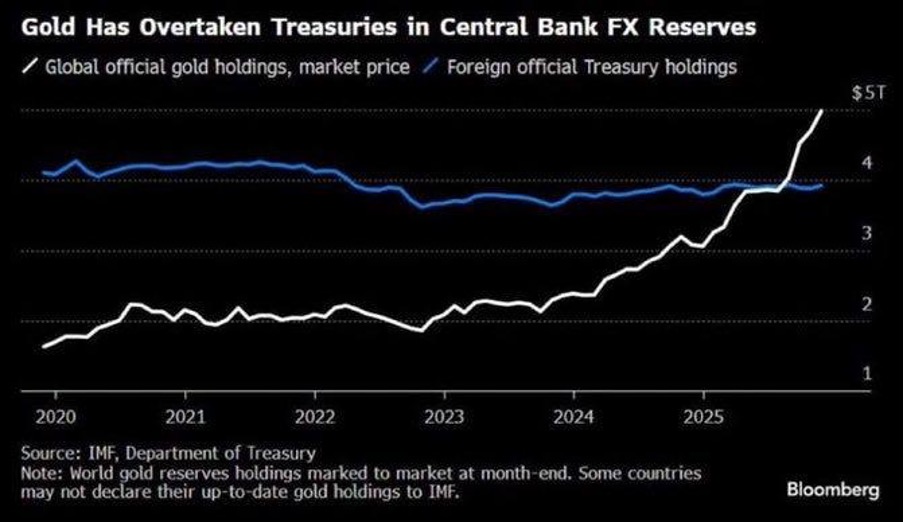
In the face of this disconnect, gold continues to function as monetary insurance. Central bank purchases and its independence from any issuer reflect concerns about debt, liquidity, and financial stability.